Learn how to bring structure, automation, and collaboration into your content process and produce higher quality work at scale.
ContentOps, or Content Operations, is the framework that supports a scalable, efficient, and high-quality content production process.
Whether you’re:
- 👤 A solo creator balancing multiple hats,
- 🧠 A technical writer handling complex documentation,
- 👥 Or a content team managing dozens of stakeholders…
ContentOps helps you deliver better content—faster, with less friction and more impact.
1. Audit Your Current Workflow
- Where do tasks get delayed?
- What’s still done manually?
- Where do quality issues or handoff failures occur?
- Map the lifecycle — from ideation to publication.
- Talk to stakeholders to identify blockers.
- Document the real vs. intended process.
2. Standardize the Process
Consistency accelerates collaboration and reduces rework.
- Use templates for briefs, outlines, and publishing checklists.
- Maintain a shared style guide (tone, formatting, visuals).
- Clearly define ownership, timelines, and handoff protocols.
3. Choose Tools That Work for Your Team
Select tools that fit your workflow, not just trends.
- Planning: Trello, Airtable, Notion
- Authoring: Google Docs, Markdown, CMS editors
- Automation: Zapier, Make, native CMS triggers
Keep your stack lean, connected, and easy to maintain.
4. Organize and Centralize Assets
- Store all assets (images, drafts, guidelines) in a shared, organized location (Google Drive, Dropbox, or your CMS).
- Use clear naming conventions and folder structures.
- Make assets easy to find for everyone involved.
5. Automate Repetitive Tasks
- Set up automated notifications for deadlines and approvals.
- Use version control (like Git) for content that requires multiple revisions.
- Automate publishing where possible (e.g., schedule posts in your CMS).
6. Measure and Iterate
- Track key metrics: content velocity, engagement, and quality.
- Hold regular retrospectives to discuss what’s working and what needs improvement.
- Update your processes and documentation as you learn.
Visualize the Workflow
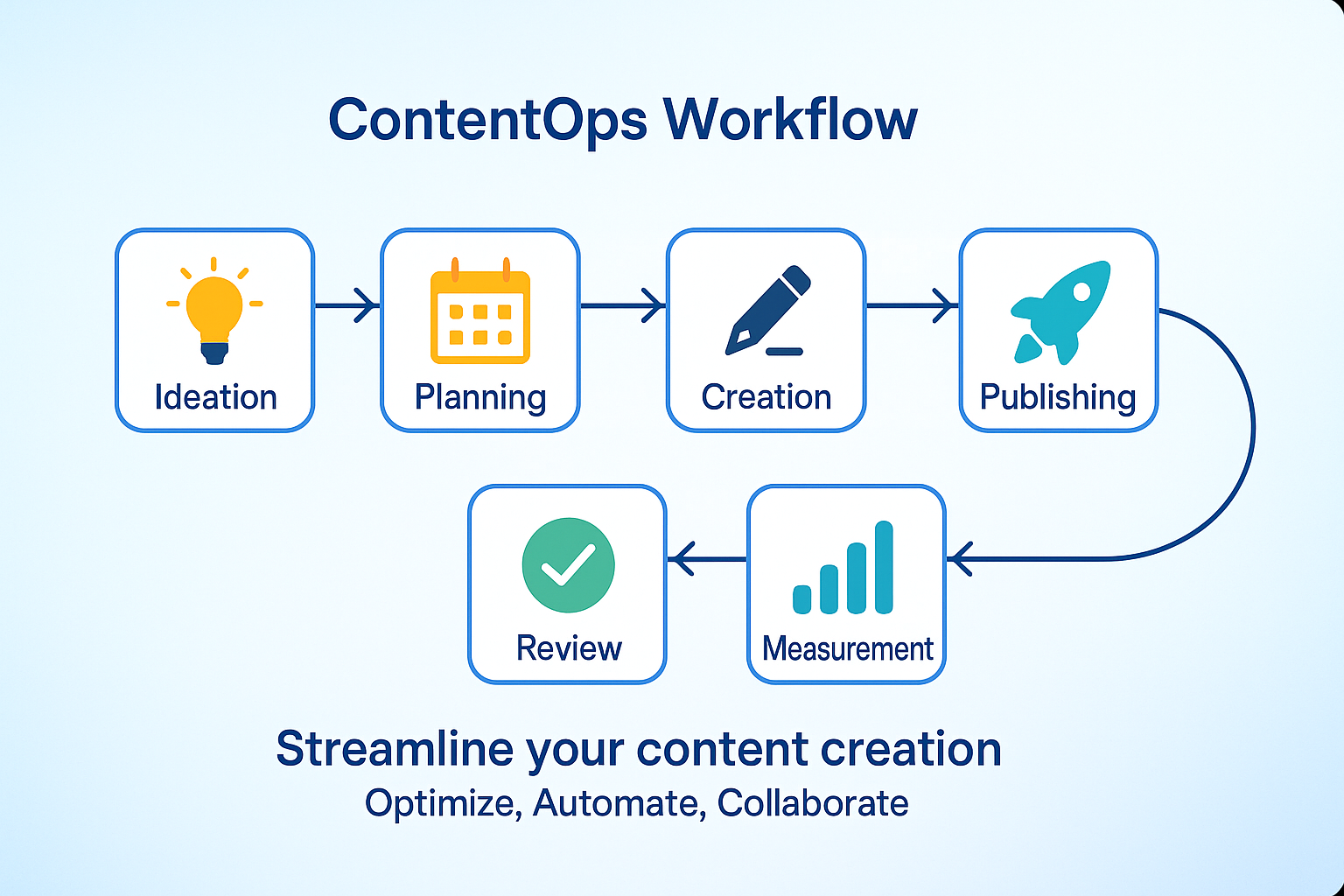
A visual snapshot of the end-to-end ContentOps lifecycle—from ideation to publishing and performance measurement.
Final Takeaway
ContentOps isn’t about adding bureaucracy. It’s about creating systems that support clarity, speed, and quality.
- Start where you are.
- Fix what slows you down.
- Improve a little with every iteration.
Let’s Connect
Have insights or tools that helped streamline your content process?
👉 Connect with me on LinkedIn — I’d love to exchange ideas and learn from your experience!
Disclaimer
The views and opinions expressed in this article are my own and do not represent those of my current or former employers.